
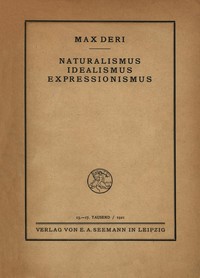
Naturalismus, Idealismus, Expressionismus by Max Deri
Published in 1921, Max Deri's Naturalismus, Idealismus, Expressionismus is a snapshot of a revolution. The book is his attempt to make sense of the three major artistic forces clashing in Europe just after World War I. He doesn't just describe them; he puts them in a room together and lets them argue.
The Story
There isn't a traditional plot with characters. Instead, the "story" is the dramatic shift in how artists saw their job. Deri starts with Naturalism, which tried to show life exactly as it is, warts and all—think gritty novels and plays about social problems. Then he contrasts it with Idealism, which aimed for beauty, harmony, and timeless truths, often looking to mythology or perfected forms. Finally, he lands on Expressionism, the radical new kid. This movement said, "Forget the outside world!" It was all about twisting reality to show inner emotions—fear, joy, angst—through wild colors, distorted shapes, and intense drama.
Why You Should Read It
What's amazing is that Deri was writing this while the paint was still wet, so to speak. He's not looking back from a safe distance; he's in the thick of the debate, trying to figure out what these explosive new Expressionist works mean. His excitement and confusion are palpable. Reading him is like getting a backstage pass to the birth of modern art. He helps you understand that a weird, spiky Expressionist painting isn't just "ugly"—it's a deliberate scream against the calm, pretty lies of Idealism or the cold, hard facts of Naturalism. He makes you feel the high stakes: art wasn't just decoration; it was a search for meaning in a shattered world.
Final Verdict
This is a perfect book for anyone who visits a modern art museum and thinks, "I don't get it." It's also great for history lovers who want to feel the intellectual pulse of the 1920s. It's short, a bit dense in places, but packed with fiery ideas. You won't get a neat answer from Deri, but you'll come away with a much better framework for the big, messy question that still follows us today: What is art for?
This content is free to share and distribute. Preserving history for future generations.
John Davis
6 months agoI have to admit, the atmosphere created is totally immersive. Definitely a 5-star read.
Ashley Lopez
11 months agoHigh quality edition, very readable.
Oliver Anderson
10 months agoAfter finishing this book, it challenges the reader's perspective in an intellectual way. I couldn't put it down.
John Johnson
11 months agoGreat read!
Donna Brown
1 year agoRecommended.