
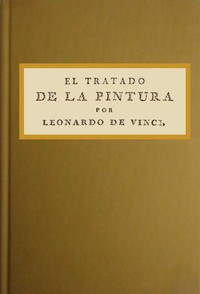
El tratado de la pintura by da Vinci Leonardo and Leon Battista Alberti
Let's clear up the title first, because it's the book's first puzzle. El tratado de la pintura is not a single book written by two men together. It's a Spanish translation from the 18th century that brings together the foundational ideas of Leon Battista Alberti from his 1435 work, Della Pittura, with notes and thoughts from the legendary notebooks of Leonardo da Vinci. Alberti was the architect and theorist who gave artists a mathematical system for perspective, essentially a 'how-to' guide for creating realistic space on a flat surface. Decades later, Leonardo, the ultimate observer and experimenter, took those ideas and ran with them, filling thousands of pages with deeper studies of light, shadow, anatomy, and emotion.
The Story
There's no plot with characters, but there is a clear narrative arc: the birth and evolution of Renaissance art theory. The 'story' is the journey of an idea. It starts with Alberti laying down the law—geometry is king, and painting is a serious intellectual pursuit. Then, we get Leonardo's voice, which is less about strict rules and more about passionate observation. He asks how to paint the glow of twilight or the movement of a frown. Reading them together, you see a conversation across time. One man builds the framework; the other fills it with life, questioning and expanding every principle. The conflict is between the rulebook and the endless curiosity of a genius.
Why You Should Read It
You should read this if you've ever felt intimidated by 'art theory.' This isn't dry philosophy. It's a masterclass from the masters. Alberti's sections are surprisingly direct—he tells painters to listen to poets and scholars, to study nature, and to make their work meaningful. Leonardo's passages are where the magic happens. His notes are messy, brilliant, and personal. You feel like you're peeking over his shoulder as he figures out why the sky is blue or how to draw a perfect storm. It makes you see paintings in galleries differently. You start to notice the calculated geometry behind a peaceful scene or the careful study of light in a portrait.
Final Verdict
This is a perfect pick for curious minds who aren't professional art historians. It's for the reader who loves history, enjoys a bit of mystery (thanks to that ambiguous title!), and wants to understand the 'why' behind some of the world's most beautiful art. Think of it as the ultimate companion for your next museum visit. It gives you the tools to see beyond the image and appreciate the incredible thought, science, and debate that went into creating the Renaissance. It’s not a light beach read, but for anyone with a spark of curiosity about how creativity works, it's absolutely fascinating.
This digital edition is based on a public domain text. It serves as a testament to our shared literary heritage.
Jessica Hill
1 year agoI didn't expect much, but the arguments are well-supported by credible references. Truly inspiring.
Jessica Allen
1 year agoGreat read!
Noah Flores
2 years agoNot bad at all.
Richard Flores
1 year agoBeautifully written.



Robert Smith
2 years agoI stumbled upon this title and the atmosphere created is totally immersive. A true masterpiece.