
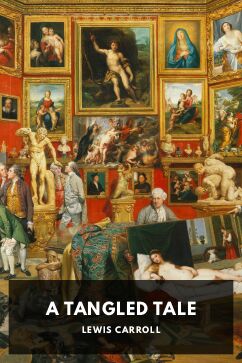
A Tangled Tale - Lewis Carroll
If you're expecting Wonderland-style adventures with talking rabbits and mad tea parties, you're in for a surprise. 'A Tangled Tale' is Lewis Carroll showing off his other passion: puzzles. He was, after all, a mathematician named Charles Dodgson in his day job. This book collects ten of his 'knots'—short, story-based problems he posed to readers of a Victorian magazine.
The Story
There isn't one continuous plot. Instead, each chapter presents a self-contained scene. You might meet a group of travelers on a railway journey, guests at a dinner party, or soldiers on a march. Carroll sets up these simple, often humorous situations with charming details. Then, he seamlessly weaves in a mathematical or logical conundrum. One knot asks you to calculate the speed of trains passing each other. Another challenges you to figure out the best way to share a cake. The 'answers' were published later, often with Carroll's witty commentary scolding readers who got it wrong. Reading it is an interactive experience. You can't help but pause and try to untangle the knot yourself before peeking at his solution.
Why You Should Read It
This book completely changed how I see logic puzzles. They're not dry exercises; they're little stories where the numbers are characters. Carroll had a gift for making abstract concepts feel personal and urgent. Will the travelers be late? Is the cake division fair? You start to care. It reveals the playful, structured mind behind the nonsense of 'Alice.' You get a sense of his humor, which is just as present here—especially in his mock-serious answers where he hands out 'knots' for incorrect solutions. It's a glimpse into the mind of a man who found equal joy in absurdity and absolute precision.
Final Verdict
Perfect for puzzle lovers, fans of Victorian whimsy, or anyone who enjoys seeing how a brilliant mind works. It's also great for readers who like short, digestible chapters. Don't be intimidated if math wasn't your favorite subject; the charm is in the attempt. Think of it as a brain-teasing snack, a delightful little side quest in Carroll's library. It's not his most famous work, but for the right reader, it might just become a secret favorite.
This content is free to share and distribute. Thank you for supporting open literature.
Ashley Rodriguez
5 months agoAmazing book.
Elijah Lewis
1 year agoGreat reference material for my coursework.
Joshua Brown
1 year agoWow.
Joshua Taylor
2 years agoHaving read this twice, the character development leaves a lasting impact. A true masterpiece.
Matthew Scott
1 year agoThe fonts used are very comfortable for long reading sessions.