
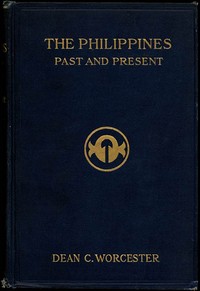
The Philippines: Past and Present (Volume 2 of 2) by Dean C. Worcester
Let's be clear: this isn't a novel. The Philippines: Past and Present, Volume 2 is Worcester's detailed report card on America's early administration of the islands, picking up where Volume 1 left off. He was a scientist-turned-bureaucrat who spent years there, and this book is his defense and explanation of that work.
The Story
Think of it as a massive, earnest blog from the early 1900s. Worcester walks us through his department's biggest projects. He talks about the gritty work of public health—fighting cholera and building hospitals. He describes the huge effort to map the islands and build infrastructure like roads and telegraph lines. A big chunk of the book is dedicated to his interactions with different Filipino communities, from the Muslim groups in the south to various indigenous peoples. He argues passionately for preserving their cultures while also pushing for American-style progress. The whole narrative is framed as a response to critics back in the U.S. who questioned the cost and morality of the occupation, making it a real-time argument for his life's work.
Why You Should Read It
You read this not for a balanced modern history, but for a raw, unfiltered look into the colonial mind. Worcester's voice is the book's most compelling feature. He is genuinely convinced of his mission to "civilize" and "improve" the Philippines. His writing is packed with a certainty that can be jarring today. That's what makes it so valuable. You get to see the logic, the biases, and the blind spots of American imperialism up close. It's like hearing the director's commentary on a major historical event, where the director has no idea how future audiences will view his film.
Final Verdict
This book is perfect for history buffs and students who want to move beyond textbooks and hear a primary source speak for himself, flaws and all. It's also great for anyone interested in colonialism, Southeast Asian history, or the messy reality of government. Warning: It's not a light read, and Worcester's paternalistic views will (and should) make you cringe. But if you can sit with that discomfort, you'll find a document that is infinitely more revealing than any sanitized summary. Approach it as a conversation with the past, and you'll be rewarded with profound insights into how empires saw themselves.
There are no legal restrictions on this material. Thank you for supporting open literature.
James Moore
1 year agoBeautifully written.
Sandra Walker
1 year agoI came across this while browsing and it provides a comprehensive overview perfect for everyone. Highly recommended.
Joshua Rodriguez
3 months agoComprehensive and well-researched.
Joseph Moore
1 year agoFive stars!

Richard Wilson
1 year agoRecommended.