
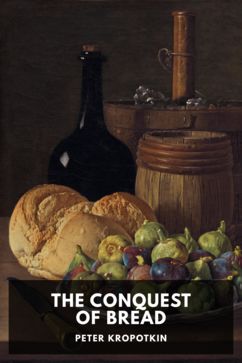
The Conquest of Bread - Peter Kropotkin
Forget everything you think you know when you hear the word 'anarchist.' Peter Kropotkin's The Conquest of Bread isn't about chaos; it's a meticulously researched blueprint. Kropotkin, a scientist and geographer, uses data and observation from his time to make a stunning claim: by the late 1800s, humanity already possessed the knowledge and tools to provide a comfortable life for all. The problem, he argues, isn't a lack of resources, but how we hoard and distribute them.
The Story
There's no traditional plot here. Instead, Kropotkin builds his case like a lawyer. He walks you through agriculture, housing, and industry, showing how much we waste under capitalism and how much we could produce if we worked cooperatively. He imagines a revolution not of barricades, but of barns and bakeries—where communities immediately seize the means of survival (the 'bread' of the title) and organize society around the principle 'from each according to their ability, to each according to their need.' It's a step-by-step thought experiment on how to run a society without bosses or money.
Why You Should Read It
I picked this up out of historical curiosity and found it shockingly relevant. When Kropotkin talks about the alienation of factory work or the absurdity of a housing crisis, he's describing 2024. His core idea—that human beings are hardwired for cooperation, not just competition—is a powerful antidote to the 'everyone for themselves' narrative. It’s not a perfect plan; some parts feel dated. But the central question haunts you: Are we really doing the best we can? Reading it made me frustrated, then hopeful. It’s a book that doesn't just critique; it actively builds a vision of something better.
Final Verdict
Perfect for anyone feeling cynical about the future, fans of utopian/speculative fiction like Ursula K. Le Guin, and people who enjoy big, challenging ideas. If you've ever read a news headline about food waste next to one about famine and felt a deep sense of wrongness, this book gives language to that feeling. It's not an easy read—it demands your attention—but it’s one of the most hopeful and provocative books I've ever encountered. Keep an open mind, and let Prince Kropotkin show you a world that could be.
This work has been identified as being free of known copyright restrictions. Use this text in your own projects freely.
Donald Allen
1 year agoThe formatting on this digital edition is flawless.
Kevin Anderson
5 months agoFast paced, good book.
Michelle Perez
1 year agoA must-have for anyone studying this subject.
Deborah Johnson
1 year agoI started reading out of curiosity and it creates a vivid world that you simply do not want to leave. I learned so much from this.

Karen Anderson
1 year agoI didn't expect much, but the character development leaves a lasting impact. I couldn't put it down.