
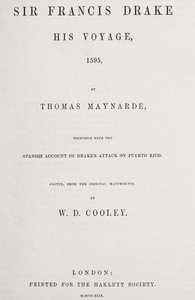
Sir Francis Drake: His Voyage, 1595 by active 1595 Thomas Maynarde
Let's set the scene. It's 1595, and Sir Francis Drake is a living legend in England—the pirate hero who humbled Spain. He sets off on what's meant to be one last glorious raid, aiming for Panama with his old partner, Sir John Hawkins. Thomas Maynarde, the author, is right there with them, keeping a journal. What follows isn't a victory march.
The Story
The voyage is cursed from the start. The fleet is too big and slow. Drake and Hawkins, both past their prime, bicker constantly. They miss opportunities and tip off the Spanish. Then, Hawkins dies at sea. Drake is now solely in charge, but his famous intuition seems to have deserted him. The book follows their failed attack on San Juan, Puerto Rico, where Spanish guns are waiting for them. From there, it's a grim slide. They limp along the Spanish Main, attempting half-hearted raids that go nowhere. Disease sweeps through the crew. Finally, Drake himself catches dysentery and dies off the coast of Panama, buried at sea in a lead coffin. The expedition, meant to bring more gold and glory, limps home a shattered, leaderless wreck.
Why You Should Read It
This isn't a history book written centuries later. This is a diary. You feel the heat, the frustration, and the fear. Maynarde doesn't paint Drake as a monster, but he doesn't hide his flaws either. You see a man trapped by his own reputation, making stubborn calls because the 'Dragon' can't be seen to retreat. The real tension isn't with the Spanish—it's internal, watching a legend unravel. It's a powerful, human story about the end of an era, told without any of the patriotic sugar-coating that usually comes with these tales.
Final Verdict
Perfect for history buffs who are tired of the shiny, mythologized versions of events. If you like primary sources that let you draw your own conclusions, this is a fascinating read. It's also great for anyone interested in the messy, often inglorious reality of exploration and naval warfare. Fair warning: it's a journal, so the prose is straightforward and dated, but that's also its greatest strength. You're not getting a novelist's drama; you're getting a witness's truth. A short, sobering, and absolutely gripping look at the fall of a giant.
This publication is available for unrestricted use. Access is open to everyone around the world.
Joseph Davis
6 months agoWithout a doubt, the flow of the text seems very fluid. A valuable addition to my collection.
Karen Lewis
1 year agoAfter hearing about this author multiple times, the pacing is just right, keeping you engaged. I would gladly recommend this title.
Kimberly Garcia
1 year agoThis book was worth my time since the storytelling feels authentic and emotionally grounded. I will read more from this author.
Mary Gonzalez
3 months agoPerfect.





Michael Moore
1 year agoBased on the summary, I decided to read it and the author's voice is distinct and makes complex topics easy to digest. Absolutely essential reading.