
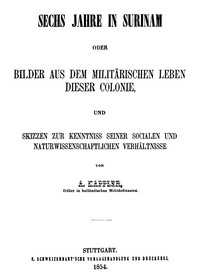
Sechs Jahre in Surinam by A. Kappler
August Kappler was a young German soldier with a curious mind when he shipped off to the Dutch colony of Suriname in 1836. He ended up staying for six years, and this book is his firsthand account of that time. He wasn't a governor or a missionary; he was a man trying to make his way, taking on jobs from soldier to postal clerk to running a tavern, all while obsessively studying the natural world around him.
The Story
The book follows Kappler's journey chronologically. We land with him in Paramaribo, a bustling, multicultural port town. He walks us through its streets, introduces us to its mix of European colonists, enslaved Africans, and Indigenous peoples. A big part of his story is his struggle to establish a livelihood, dealing with bureaucracy and the challenges of a tropical economy. But the heart of the narrative is his exploration. He ventures into the rainforest, meticulously documenting the insects, birds, and plants he finds. He describes trips upriver, encounters with Maroon communities (descendants of escaped slaves), and the sheer, overwhelming force of the Surinamese wilderness. It's less a plotted story and more a vivid, episodic record of adaptation and discovery.
Why You Should Read It
You should read this for the unfiltered, boots-on-the-ground perspective. Kappler isn't writing to impress anyone back in Europe. His observations feel immediate. You get the sweat, the mosquitoes, the wonder at a new butterfly species, and the grim reality of a slave-based society happening right outside his door. His passion as a self-taught naturalist is contagious. Even when he's listing types of beetles, there's an excitement in his writing. He doesn't have all the answers, and he sometimes reflects the prejudices of his time, which makes his account feel real and human, not sanitized. Reading it is like looking over his shoulder as he sketches in his notebook.
Final Verdict
This is a perfect read for anyone who loves real adventure stories or immersive historical diaries. If you enjoyed the detailed natural observations in Darwin's voyage journals or the gritty frontier feel of some American pioneer accounts, you'll find a lot to love here. It's not a fast-paced novel; it's a slow, rich soak in a specific time and place. Think of it as a long, fascinating letter from a remarkably observant friend who went somewhere very few people ever did. For history buffs, armchair explorers, and anyone curious about 19th-century colonial life from a ground-level view, Kappler's six years are a journey worth taking.
You are viewing a work that belongs to the global public domain. Preserving history for future generations.
Barbara Thompson
1 year agoGreat read!
Lisa Lopez
1 year agoThe fonts used are very comfortable for long reading sessions.
Kimberly Garcia
4 months agoBased on the summary, I decided to read it and the clarity of the writing makes this accessible. Highly recommended.
Michelle Taylor
1 year agoVery helpful, thanks.







James Wright
1 year agoI had low expectations initially, however the narrative structure is incredibly compelling. Exceeded all my expectations.