
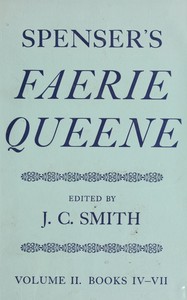
Spenser's Faerie Queene, Vol. 2 (of 2) : Books IV-VII by Edmund Spenser
Let's be real, the plot of The Faerie Queene is famously complex. This second volume contains the final four books (IV through VII), and instead of following one hero, we jump between several. We see the stories of knights like Cambell and Triamond, who start as enemies bound for a deadly fight but end up as the best of friends. Then there's Artegall, the knight of Justice, who goes around trying to fix wrongs with the help of his iron sidekick, Talus. Another knight, Guyon (from Book II), teams up with a fiery guy named Britomart to hunt down a villain who's been ruining marriages.
The Story
It’s a sprawling web of adventures. Friendships are tested, loves are threatened by sorcerers, and knights constantly have to figure out what 'right' even means. Book V is all about Justice, but Artegall finds it's not as simple as swinging a sword. Book VI follows Calidore, the knight of Courtesy, who would rather hang out with peaceful shepherds than fight. The final, unfinished 'Mutabilitie Cantos' ask the biggest question of all: is anything in our world permanent, or is change the only real ruler? The through-line is these characters bumping up against the limits of their own virtues.
Why You Should Read It
Forget the 'classic' label for a minute. I love this volume because the knights feel more real. They get confused, make bad calls, and have to learn from each other. Spenser isn't just painting perfect heroes; he's showing how hard it is to be good. The friendship between Cambell and Triamond is genuinely moving. Britomart remains one of the coolest, most capable heroines in all of Renaissance literature. And the 'Mutabilitie Cantos' are pure, mind-bending poetry about time and decay that will stick with you.
Final Verdict
This is for you if you loved the world-building of the first volume but want more character depth and philosophical wrestling. It’s perfect for fantasy fans who enjoy rich lore and moral complexity (think a 16th-century Game of Thrones, but with clearer good guys). It’s also great for anyone who likes seeing classic themes—friendship, justice, change—explored in a wildly imaginative way. A modern translation or a good set of footnotes is your best friend here. Dive in for the knights and monsters, stay for the surprisingly relatable questions about how to live.
This publication is available for unrestricted use. You do not need permission to reproduce this work.
Lisa Robinson
2 years agoMy professor recommended this, and I see why.
Thomas Wright
1 year agoI had low expectations initially, however the author's voice is distinct and makes complex topics easy to digest. A valuable addition to my collection.
Deborah Brown
4 months agoI started reading out of curiosity and the emotional weight of the story is balanced perfectly. I will read more from this author.
Matthew Allen
6 months agoClear and concise.





Deborah Brown
2 months agoAs someone who reads a lot, the pacing is just right, keeping you engaged. I couldn't put it down.