
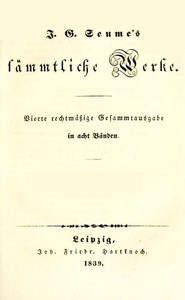
Sämmtliche Werke 1-2: Mein Leben / Spaziergang nach Syrakus im Jahre 1802 by Seume
This book is actually two works in one. The first part, Mein Leben (My Life), is Seume's autobiography. It reads like a confession. He tells you about being kidnapped as a young man and forced to serve as a Hessian soldier, his time fighting in the American Revolutionary War, and his eventual return to Europe. It's a life full of hardship, bad luck, and a deep-seated desire for freedom. It sets the stage for everything that follows.
The Story
The main event is Spaziergang nach Syrakus (A Walk to Syracuse). In 1802, Seume, fed up and restless, decides to walk from Grimma, Germany, all the way to Sicily. He packs light, carries a walking stick, and heads south. The 'plot' is his journey. He crosses the Alps, walks through a politically fragmented Italy, and finally reaches his goal. But the story isn't about the landmarks. It's about the muddy roads, the conversations with farmers and priests, the simple meals, and the constant struggle of the road. He observes the poverty of the people and the fading glory of ancient ruins with a critical, sympathetic eye. The journey is his rebellion against a comfortable but unfulfilling life.
Why You Should Read It
You should read this because Seume feels like a friend from the past you instantly understand. He's grumpy, observant, and utterly human. His travel writing skips the romantic fluff. When he sees the 'famous' sights, he often gives a shrug and talks about the cracked plaster or the beggar nearby. It’s refreshingly real. The book is a powerful reminder that the best journeys are about internal change, not just checking places off a list. His walk is a physical act of mental liberation. Reading it makes you want to look at your own world more carefully, to talk to people, and maybe even go for a very, very long walk.
Final Verdict
This is perfect for anyone who loves travel stories but is tired of the polished, perfect ones. It's for history lovers who want the gritty, ground-level view of Europe at the turn of the 19th century, not the view from a palace. It's also for thinkers and wanderers—people who believe a journey can be a form of philosophy. It's not a fast-paced adventure; it's a slow, thoughtful stroll through landscapes and a man's mind. If you enjoyed the reflective spirit of a book like Zen and the Art of Motorcycle Maintenance but prefer cobblestones to highways, you'll find a kindred spirit in Seume.
This work has been identified as being free of known copyright restrictions. Thank you for supporting open literature.
Thomas Flores
4 months agoSurprisingly enough, the flow of the text seems very fluid. I would gladly recommend this title.
Elijah Brown
10 months agoMy professor recommended this, and I see why.
Sandra Flores
1 year agoI came across this while browsing and the depth of research presented here is truly commendable. Thanks for sharing this review.
Mary Hernandez
1 year agoBased on the summary, I decided to read it and the pacing is just right, keeping you engaged. A true masterpiece.



Carol Nguyen
1 year agoFrom the very first page, the clarity of the writing makes this accessible. This story will stay with me.