
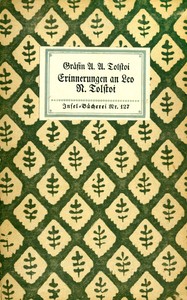
Erinnerungen an Leo N. Tolstoi by grafinia A. A. Tolstaia
This isn't a biography in the traditional sense. It's a collection of personal memories, like pages from a long, detailed letter. Countess Aleksandra Tolstaia, Tolstoy's cousin and close confidante, writes about their lifelong friendship. She takes us from their shared aristocratic childhoods through Tolstoy's wild youth, his literary triumphs, and finally, his late-life spiritual crisis that turned his world upside down.
The Story
The 'story' is the arc of a life, seen through the eyes of a fond but clear-sighted observer. Aleksandra describes Tolstoy as a young man—restless, passionate, and full of life. She recounts his time in the army, his early literary struggles, and the joy surrounding his marriage. The heart of the memoir, however, deals with the later years. She details his growing rejection of his aristocratic life, his radical Christian anarchist beliefs, and the painful rift this created with his wife, Sofya. Aleksandra was often caught in the middle, trying to be a peacemaker. Her account ends with the profound sadness of his final flight from home and death at the Astapovo railway station.
Why You Should Read It
You read this to get the texture of a person, not just the facts. Aleksandra's voice is wonderful—warm, witty, and occasionally exasperated. She doesn't put Tolstoy on a pedestal. She shows us his genius, but also his stubbornness, his occasional cruelty in pursuit of an ideal, and the sheer exhaustion he could inflict on those around him. It makes the author of War and Peace feel startlingly real. You see the cost of his beliefs, not in abstract terms, but in the tired eyes of his wife and the confusion of his children. It's a necessary counterpoint to Tolstoy's own writings and the saintly image that sometimes surrounds him.
Final Verdict
This is a must-read for anyone fascinated by Tolstoy, but it's also a gripping read for anyone interested in family dynamics, fame, and the messy reality behind a public persona. It's perfect for history buffs who want the 'inside story,' for book clubs looking to discuss the man behind the masterpiece, and for readers who love memoirs that feel like an intimate conversation. Just be prepared—the legendary Tolstoy you meet here is brilliantly, frustratingly, and beautifully human.
No rights are reserved for this publication. Preserving history for future generations.
Anthony Robinson
1 year agoRead this on my tablet, looks great.
Edward Miller
1 year agoWithout a doubt, the narrative structure is incredibly compelling. I learned so much from this.
Donald Brown
1 year agoThe layout is very easy on the eyes.
Daniel Rodriguez
1 year agoJust what I was looking for.


Lucas Smith
1 year agoTo be perfectly clear, the content flows smoothly from one chapter to the next. Absolutely essential reading.