
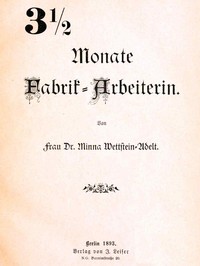
3½ Monate Fabrik-Arbeiterin by Minna Wettstein-Adelt
In 1898, Minna Wettstein-Adelt, a well-educated journalist, decided to see factory life for herself. She didn't just interview workers—she became one. Under the fake name 'Hermine Röhrich', she found work in a textile mill. '3½ Monate Fabrik-Arbeiterin' is the diary she kept during those months. It's a straightforward, often shocking, account of her daily grind.
The Story
The book follows Minna's journey from her first nervous day to her final exhausted departure. She details the relentless routine: waking before dawn, the long walk to the factory, and twelve-hour shifts spent standing at noisy machines. We feel her physical pain—the aching feet, the strained eyes from poor light. We see the tiny wages that vanish on rent and meager food, leaving nothing for warmth or comfort. But the story isn't just about hardship. It's about the women she worked alongside. She writes about their gossip, their jokes that cut through the misery, and the quiet ways they helped each other survive. The central tension isn't a fictional plot, but the real, daily conflict between human endurance and a system designed to grind people down.
Why You Should Read It
This book stuck with me because it feels so immediate. Minna doesn't preach; she shows you. You're right there with her, feeling the chill of the factory floor and the sting of a foreman's contempt. It personalizes a huge piece of social history. These aren't statistics—they're young women with names and dreams, trapped in a brutal cycle. What hit me hardest was the resilience and dark humor the workers shared. Even in awful conditions, their humanity shines through. It also makes you think about who makes the things we use every day, a question that's still painfully relevant.
Final Verdict
This is a must-read for anyone interested in real stories behind the Industrial Revolution, women's history, or the roots of labor rights. It's perfect for readers who enjoyed Down and Out in Paris and London by Orwell or any kind of immersive narrative journalism. The writing is clear and direct, without fancy language, which makes the reality it describes even more powerful. Be ready—it's not a cheerful read, but it's an important and unforgettable one. It gives a voice to people history often forgot.
The copyright for this book has expired, making it public property. You can copy, modify, and distribute it freely.
Edward Perez
1 year agoA bit long but worth it.
Nancy Harris
1 year agoGreat read!
Steven Anderson
1 year agoAfter hearing about this author multiple times, it manages to explain difficult concepts in plain English. Thanks for sharing this review.
Dorothy Clark
8 months agoGreat reference material for my coursework.


Donald Thomas
1 year agoPerfect.