1

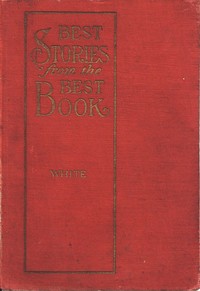
Best Stories from the Best Book: An Illustrated Bible Companion for the Home — Reading Companion
(0 User reviews)
1464
Project Gutenberg
2014
Not confirmed
Bible -- History of Biblical events; Bible stories, English; Readers -- Bible
Readers of public-domain and historical texts
Project Gutenberg digital edition
en
Edition facts
Words
32,408
Reading time
141 min
Text sections
6
This digital edition of Best Stories from the Best Book: An Illustrated Bible Companion for the Home — Reading Companion is described by source-level measurements including 32,408 words, 2 hr 21 min estimated reading time, and 6 detected text sections.
The text analysis averages about 14.6 words per sentence, while the detected sections provide another way to judge how the source is divided.
Project Gutenberg metadata also associates the work with “Bible -- History of Biblical events,” connecting these edition facts with the source record’s subject description.
Source:
Project Gutenberg record #46970
An illustrated Bible companion for home use, divided into a children's reading primer and narrative retellings of biblical events, with pedagogical notes on blackboard teaching and sentence reading.
Read the complete public-domain text at its original source.
Read on Project GutenbergThis volume pairs a primer for early readers with narrative retellings of biblical history, a structure that reflects its dual audience of children and their parents or teachers. The first department, prepared by Ella King Sanders, offers graded lessons built around simple idioms such as “I see” and “I have,” with instructions for blackboard work and original composition. The second department, by James Edson White, recounts episodes from the Old Testament in a direct, expository style that often shifts into a slower, more solemn cadence at moments of divine intervention—such as the Passover narrative, where the prose breaks into short, lineated phrases to mirror the ritual’s gravity.
A Primer Built on Objects and Idioms
The opening lessons are not abstract but grounded in visible, tangible things. The preface directs teachers to “draw the objects” on the blackboard—a leaf, a star—and to build sentences from the child’s own spoken words. The idiom “I see a *” is used as a template, with the asterisk replaced by a drawing. This method treats reading as an extension of observation and conversation, not as decoding isolated symbols. The text emphasizes that “silent reading should always precede oral reading,” a pedagogical principle that prioritizes comprehension over performance. The lessons are designed to be supplemented and varied, not followed rigidly; the blackboard work on page 33 is offered as “suggestive” rather than prescriptive.
Narrative Voice and the Shift to Solemnity
In the second department, the prose moves briskly through most events—plagues are listed in quick succession, with each introduced by a bold heading and a few terse sentences. But at the Passover, the rhythm changes. The text slows to describe the lamb, the hyssop, the blood on the doorposts, and the posture of the eaters: “shoes on their feet, their staff in hand, ready for flight.” Then the layout itself shifts: a series of short lines, each beginning with “The,” breaks the paragraph into a visual litany. This typographic change signals a shift from narration to instruction, as the author explains the typological meaning: “The passover was also a type of Christ, the Lamb of God.” The voice becomes homiletic, drawing a direct parallel between the blood of the lamb and the blood of Jesus.
Recurring Patterns of Testing and Deliverance
Across the excerpts, a pattern emerges: God brings his people into a position of apparent hopelessness in order to test their faith and then deliver them. The text states explicitly that the Lord brought the Israelites to the Red Sea “to test their faith, and show once more how He would deliver them from their enemies.” This same logic is applied to the plagues—each one is a demonstration of power that Pharaoh resists—and to the Passover, where the Israelites must act (strike blood on the doorposts) to be saved. The narrative voice treats these events as lessons, not just stories; the author repeatedly steps back to state the moral or theological point, as when he notes that the silver and gold taken from Egypt was “only a partial payment for their long years of service.”
Readers approaching this book should note its two-part design: the first department is a teaching manual for adults to use with children, while the second is meant to be read aloud, with the pictures shown and explained. The text itself is a hybrid—part reader, part catechism, part family devotional. Its value lies less in originality of interpretation than in its methodical, concrete approach to biblical literacy, and in the way its prose slows or quickens to match the gravity of the episode it recounts.
I remember evenings spent with Best Stories from the Best Book, its gentle retellings carrying a quiet trust in the child’s mind. That same sober care for shaping young souls breathes through the old Considerations on Religion and Public Education With remarks on the speech of M. Dupont delivered in the National Convention of France, together with an address to the — Themes and Context. Side by side, they whisper a shared faith in teaching as tender, deliberate work.
There are no reviews for this eBook.
There are no comments for this eBook.
Reader reflection
Your personal reading reflection
Build a private reading journal entry for this title.
Your progress
0
/
10
2
Was reading this book enjoyable?
3
Would you pass this book on to a friend?
4
Did the language feel accessible?
5
How personally connected did you feel to the book?
6
How distinctive were its ideas or approach?
7
Did any part of the book stay with you emotionally?
8
Could you apply anything you learned?
9
In one sentence, what did you learn?
10